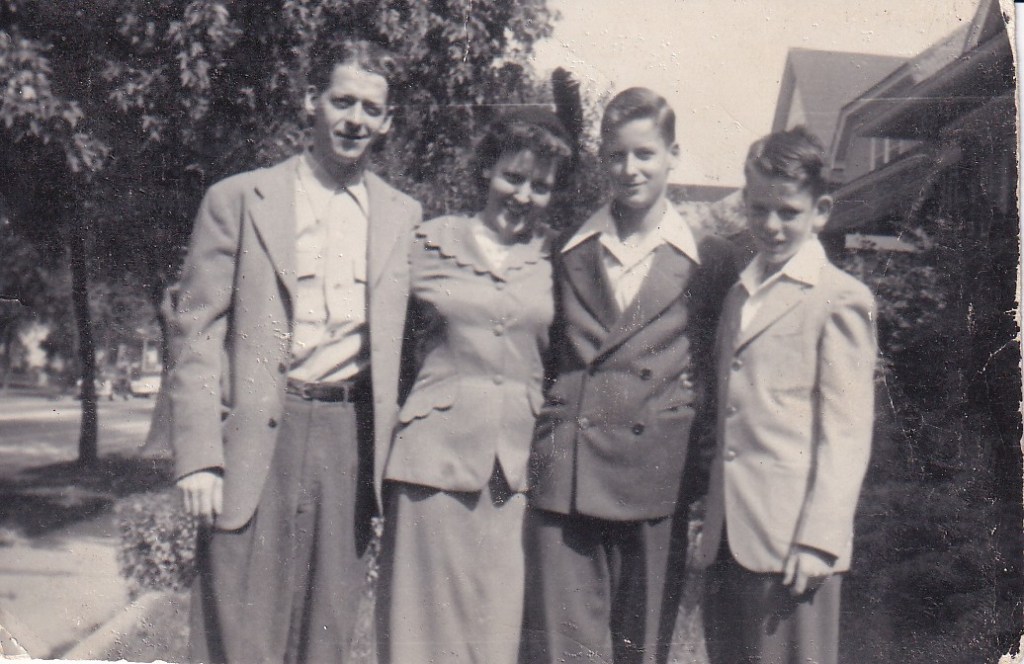
My paternal grandmother, Lillian Ester Burkhardt (known to us as Nana), was born on April 10, 1909, in Winthrop, Massachusetts. She was born the day before Easter and was named after the Easter lily. The youngest daughter of nine children, Lillian was the longest-lived among them. Nana credited her good health to daily walks and mustard.
Lillian’s parents were immigrants from different parts of Europe. Her mother, Mary D’Arcy, came from County Galway in Ireland. Her father, Peter Burkhardt, emigrated from Schleswig-Holstein, Germany’s northernmost region. Peter was born just across the border in Denmark. Mary and Peter met as young immigrants in Boston, Massachusetts.
Mary wanted to raise her children in the Catholic faith, and Peter, who had been raised Lutheran, did not object. Their household reflects the American “melting pot” of nationalities and religions. Mary D’Arcy died when Lillian was seventeen. Lillian spoke fondly of her older sisters, who may have nurtured her during their mother’s illness and death.
By the age of twenty, Lillian was working as a stenographer. She was part of a growing clerical workforce. She likely met her future husband, Francis George Gilfeather, at work. They married on June 24, 1933, and settled in Revere near Lillian’s family. She gave birth to two sons, Frank Jr. (Bud) and Paul. Lillian took great pride in her boys.
Lillian embraced the role of suburban housewife. By 1950, the family had moved to Oak Park, Illinois, part of a broader postwar pattern of families relocating for white-collar work and settling into new suburban communities. Lillian was delighted when the neighbors welcomed her with gifts of canned goods. The joke was that the labels had been removed. Nana would laugh as she recounted opening the cans without knowing what she would be serving for dinner.
I remember Uncle Bud and my dad teasing her about the lunches she packed for them when they were teenagers: a ham sandwich, a cheese sandwich, and a ham-and-cheese sandwich. She laughed at their teasing. To her, this was her way of making sure they were well fed and cared for. Three sandwiches for hungry boys; three different types of sandwiches.
Lillian and Frank returned to Massachusetts when my father Paul was a senior in high school. The 1960s brought significant deaths. Lillian lost four siblings, Frank’s youngest brother, and then her beloved husband Frank. She met those losses with quiet resilience.
Lillian maintained close relationships with her sons and their families, her sisters-in-law, and her nieces and nephews. She remained socially active throughout her life, playing cards and taking excursions with local seniors. She carried forward the same warmth and good humor that had helped her throughout her life.
To my father’s mother—because you endured, I am here. I knew you in the years we shared, and I am still learning about the world that influenced your younger years.
 Tracing North