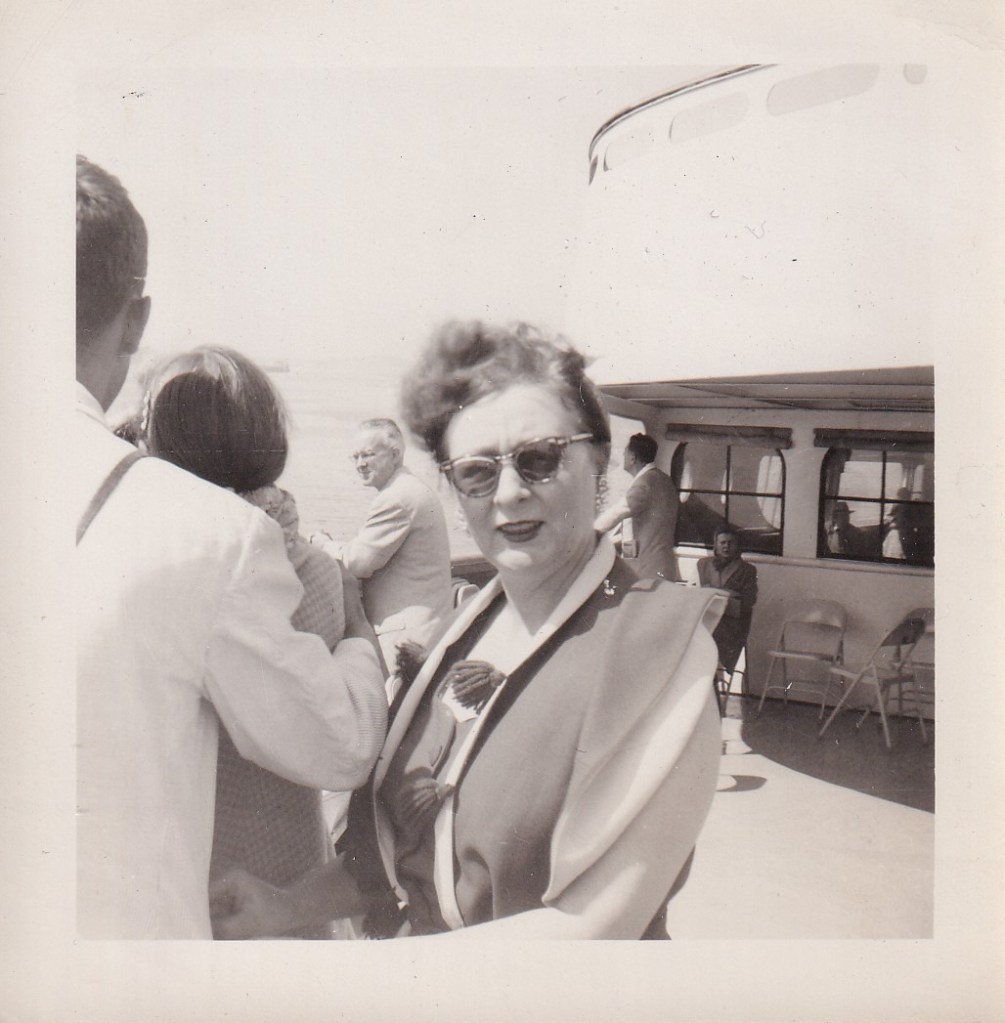
My maternal grandmother, Margaret Mary Deasy, was born on August 9, 1903 in Kinsale, Ireland. Known as Peg to many, she was the second child born to Cornelius Deasy and Margaret Barry. Cornelius and Margaret met in Boston as young Irish workers, and married there in 1901. They returned to Ireland to start their family.
By 1912, political unrest in Ireland was heating up. Cornelius returned to Boston, and Margaret followed a year later with their five children. Peg was ten years old when the family arrived in Massachusetts, old enough to remember both the wonders and challenges of their new home. “They said the streets were paved with gold,” she would tell us. Needless to say, she was disappointed.
Peg was a storyteller, and she filled our visits with memories of her life. She talked about running up the stony steps to her convent school in Ireland, her family’s move to Melrose, Massachusetts, her romance and marriage to my grandfather Lawrence, his untimely death, and the many years she spent raising two children on her own. As I revisit her life in preparation for this blog post, I find myself wanting to understand the historical context behind the stories she shared.
One story involved her work as a supervisor of the school lunch program for the children of cranberry bog workers in Wareham. I don’t know whether she began this work before my grandfather died in 1942 or whether it became a way to support her young family after his death. By 1950, she and her children were living in Melrose with her parents.
There are two historical threads to this story: cranberry harvesting and school lunch programs. The article Seasons of Strife: The Cranberry Strikes of the 1930s gives a background of cranberry harvesting, including the migrant workforce. Finns and Cape Verdeans were the predominant ethnic groups that worked in the southeastern Massachusetts bogs. Their families faced poverty due to low wages and seasonal work.
The history of school lunch programs is available at this USDA website. In Boston, the Women’s Educational and Industrial Union launched the country’s first school lunch programs in 1907. This was a response to labor exploitation of immigrant women and children. During the Great Depression, the Works Progress Administration (WPA) helped fund school lunch programs by paying cooks, bakers, and supervisors.
Those federal funds disappeared during World War II, leaving local communities to continue the work with support from schools, churches and civic organizations. The programs shifted from paid positions to largely depending upon volunteer efforts.
This lack of federal funding may have influenced Peg’s decision to move back home. There is so much to discover about those who came before us. Wareham may have documentation on the school lunch program at the library or historical society.
Peg died on February 20, 2007 in Castine, Maine at the age of 103. She is buried in Castine with her son’s family, although her name is etched onto her husband’s stone in Melrose, MA.
To my mother’s mother—because you endured, I am here. I knew you in the years we shared and from the stories you told, and I am still learning about the world that influenced your life.

