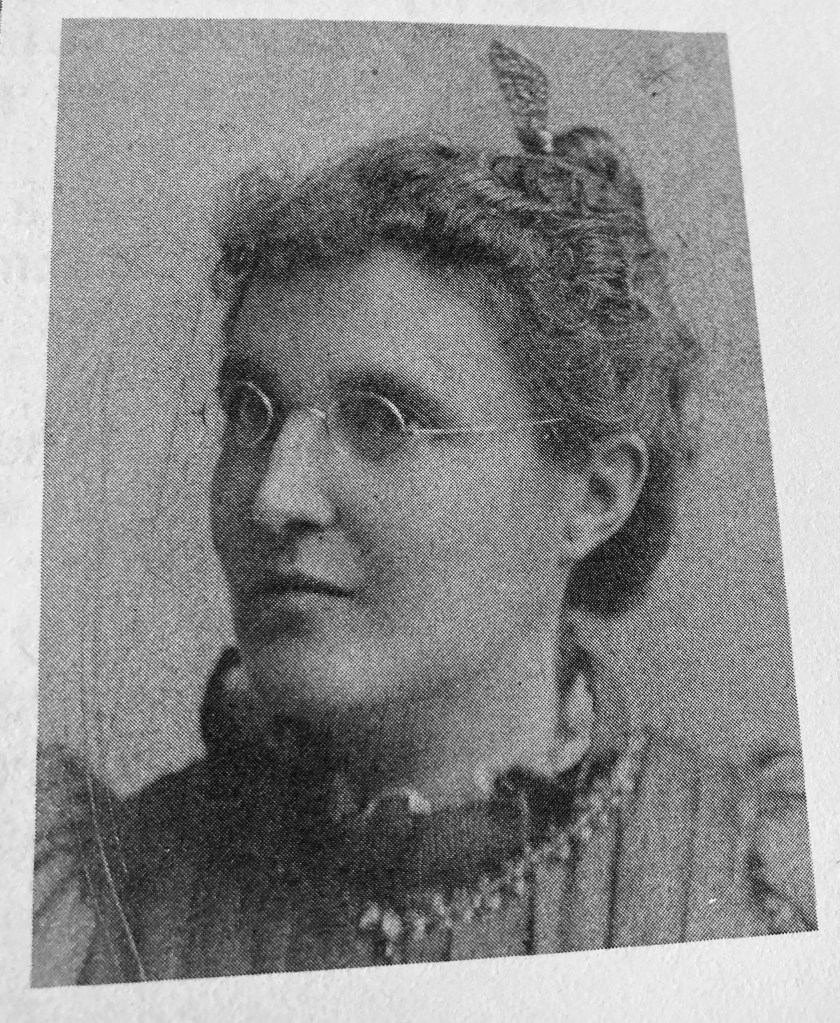
My maternal great-grandmother, Emma Estelle Pooler, was born on July 18, 1862, in Bucksport, Maine. This photograph comes from a lineage booklet compiled by Dana Pierce, my first cousin once removed.
Estelle, as she was known, was the first surviving child of Charles Benoni Pooler and Ursula “Susie” Poulin. Her parents came to Maine from Québec as children during the wave of French Canadian migration that transformed many New England communities in the 1800s. Historian David Vermette describes how Franco-American families built communities around their language, faith, and parish life throughout New England. The Poolers’ story reflects that larger history.
Charles and Susie married in Bangor in 1859 and began their married life in the home of Susie’s family. Charles was twenty-five years old and Susie just fifteen. Although they married four years before Estelle’s birth, no earlier children have been identified. By the time of the 1900 U.S. Census, Susie reported that she had given birth to thirteen children, only six of whom survived to adulthood. We have so few records that reveal women’s lives, yet this single census entry speaks to the realities of motherhood in the nineteenth century.
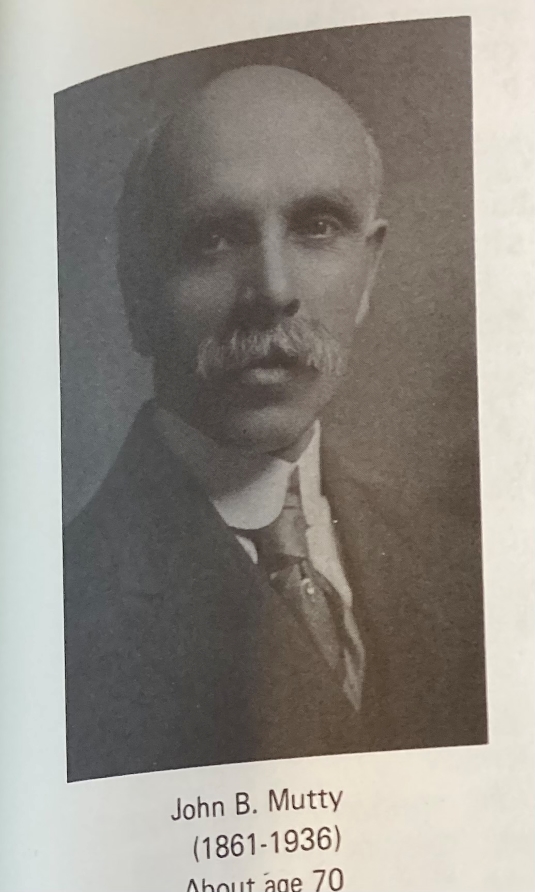
Estelle married John Baptist Mutty in Bangor on November 29, 1883. Census records show that the young couple lived within a block of Charles and Susie while they remained in Maine. Estelle gave birth to six children. Her fifth child, Clarence Paul, died of convulsions at just twenty days old. Her youngest child, my grandfather Lawrence, would die unexpectedly at the age of thirty-six.
As I learn more about Estelle’s family, I become curious in the role the Catholic Church played in the lives of French Canadian immigrants. During Estelle’s childhood, Bangor’s Catholic community grew rapidly despite widespread anti-Catholic prejudice. The city’s first Catholic parish soon outgrew its original church, and in 1855 Father John Bapst, S.J., laid the cornerstone for St. John’s Church. Only a year earlier, Father Bapst had survived being tarred and feathered in Ellsworth after defending the rights of Catholic students in Maine’s public schools.
I was surprised to discover that this same Father John Bapst officiated at Charles and Susie’s wedding in 1859. More than fifty years later, when Charles died in 1909, his funeral was held at St. John’s Church before his burial in Mount Pleasant Cemetery, Bangor’s Catholic cemetery. Another notable priest connected to my family was Reverend E. McSweeney, who officiated at Estelle and John B.’s wedding in 1883.
For readers interested in learning more about the history of Franco-Americans in New England, including the history of anti-Catholic sentiment, I highly recommend David Vermette’s A Distinct Alien Race: The Untold Story of Franco-Americans (Baraka Books, 2021).
Around 1905, John B. followed his brothers to the Boston area, where they had established themselves in manufacturing. Although John B., Estelle, and their children left Bangor, they maintained ties to both family and the Catholic Church. According to her obituary, Estelle was an active member of the Melrose Catholic Women’s Club and St. Mary’s Ladies Sodality. The church that had shaped her childhood in Bangor, Maine continued to play a role in her life in Melrose, Massachusetts.
Another constant remained: generations of women continued to support one another. Susie and Estelle began their married lives near their own mothers in Bangor. In Massachusetts, Estelle’s eldest daughter, Marie, lived next door after she married. As a widow, Estelle made her home with Marie and then with her younger daughter Frances.
Estelle died in Concord, Massachusetts, on October 9, 1951, at the age of 89. She is buried in Bangor, Maine alongside her husband, her infant son, and nearby her parents and siblings in Mount Pleasant Cemetery.
To my mother’s father’s mother–because you endured, I am here. I did not know your voice, your dreams, or your fears, yet I know that you lived.