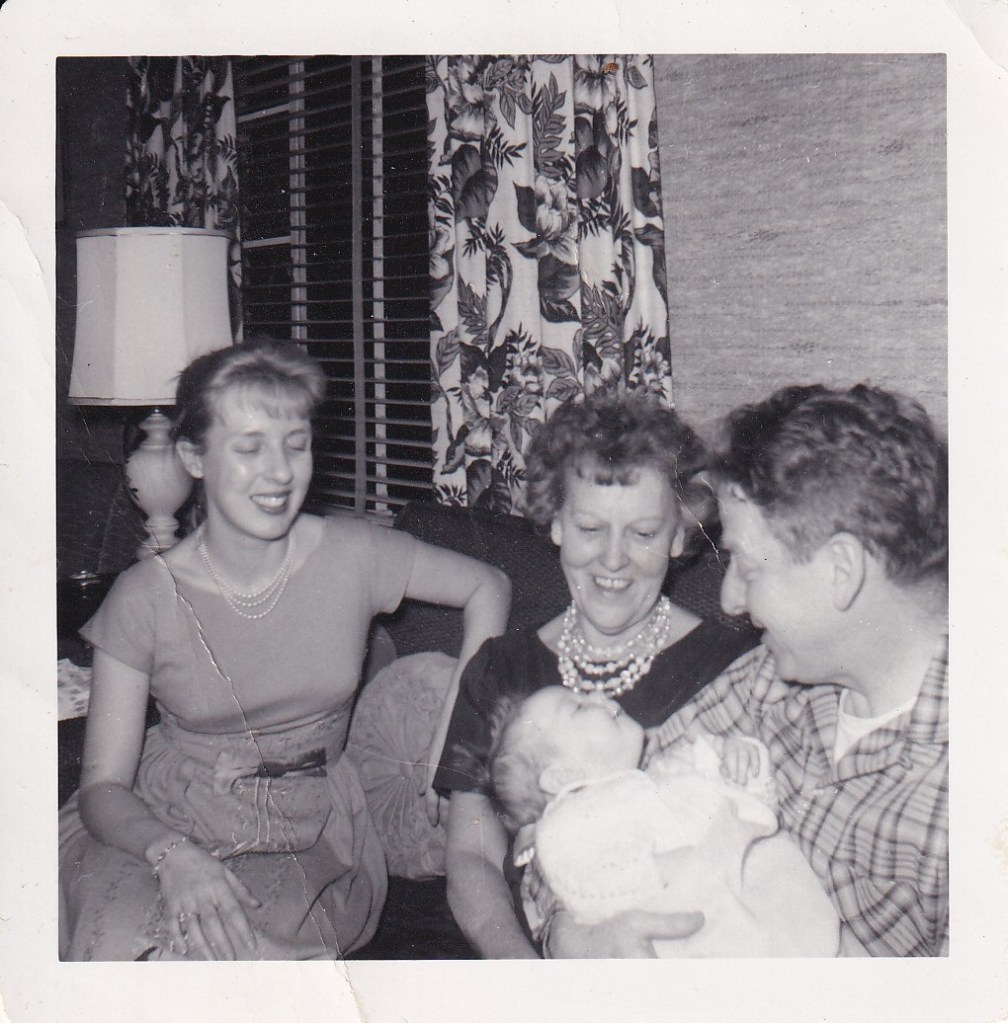
On the Birth of Peter Hansen Burkhardt

My paternal great-grandfather, Peter Hansen Burkhardt, was born on April 26, 1873 in Dybbøl, a small village in what was then the Prussian Province of Schleswig-Holstein. For those of us tracing family lines in this part of Europe, nationality is not straightforward. Dybbøl was Danish since the Viking Age. After the Second Schleswig War in 1864, the village and surrounding area came under Prussian control. When Peter and his twin sister Anne Marie were born, the region remained linguistically and culturally Danish, even as it became part of the German Empire (a federated state lead by Prussia) in 1871. After World War I, Dybbøl was returned to Denmark in the Treaty of Versailles.

In simple terms, the border between Denmark and Germany shifted many times during this era.

Family lore says that Peter went to sea as a young teenager in the late 1880s, joining a merchant ship to avoid conscription into the Prussian army. I learned that Dybbøl was the center of intense battles in the First Schleswig War (1848–1851) and the Second Schleswig War (1864). I understand why Peter and his family would support a decision to avoid serving in an army that defeated their homeland.

An article in the New York Times in 1888 described military training in the Prussian army in this way: “Under ordinary circumstances the German lad steps into the ranks at the age of 20. For three years he serves with the colors, the next four years he is in the reserve, and the following five years he belongs to the Landwehr, another reserve more remote than the first. Of these twelve years the first three are occupied entirely in severe military work.” ~From the blog 19th Century Rhineland

His twin sister, Anne Marie, remained home. In 1897, she married Heinrich Nissen in nearby Sønderborg. I found baptism and burial records that indicate she lost at least three infant children between 1897 and 1909. I believe there were children who survived, since family stories describe letters exchanged between the Nissen and Burkhardt families. I am searching for the records to confirm their lives.

Peter traveled the world before stepping off a ship, in wooden shoes and without a word of English, and opted to stay in Boston. We were told that a young Irishwoman named Mary D’Arcy noticed men teaching him incorrect (or perhaps vulgar?) English and took him under her wing. They later married and raised eight children in Revere, Massachusetts. They lost one baby, Peter, during a cholera outbreak.

Census records trace Peter’s working life over time. In 1900, he is listed as a house painter. By 1910 and 1920, he worked in ice cream manufacturing. In 1920, he is recorded as a homeowner, marking stability in his work and home life. By 1930, he had returned to house painting, and in 1940, he worked for the government as a painter.

Peter died on May 24, 1950, at the age of 77, in Revere, Massachusetts. I do not know where he is buried.

To my father’s mother’s father–because you endured, I am here. I did not know your voice, your dreams, or your fears, yet I know that you lived.
On the Birth of Mary Josephine D’Arcy

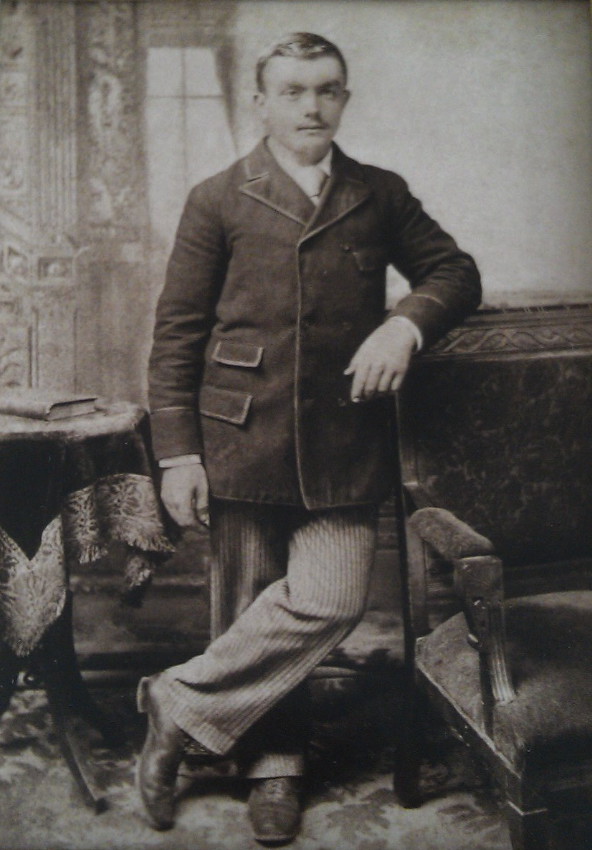
Mary D’Arcy’s daughters (standing), May and Grace.
Identities of the seated women are unknown.

My paternal great-grandmother, Mary Josephine D’Arcy, was born in Oughterard, Ireland on March 5, 1871. I do not have a photograph of Mary herself, so I am sharing a photograph of her two eldest daughters, Mary (“May”) and Grace. They look so loving and joyful.

Nana said that her mother was born in Ireland to French parents. This isn’t exactly true. The D’Arcys are believed to be descended from a French family that arrived in Ireland in the 14th century. One of the 14 Tribes of Galway, the D’Arcys were a merchant family who wielded great power. I am sure that story was told down the generations with great pride.

In this branch of my family tree, my father’s mother’s family, I am confronting multiple spellings of the family name. Mary’s last name was D’Arcy, but I have seen Darcy and Dorsey as variations in vital records and censuses.

According to the Irish Civil Marriage Record, Martin Darcy and Bridget Davin were wed on April 15, 1868. He was 24 and she was 22. They were both laborers in Porridgetown, and their fathers Rodger Darcy and Peter Davin are listed as farmers. Porridgetown is a township of Oughterard.

In the 1871 Civil Birth Registry in County Galway, Ireland, Martin Darcy and Bridget Davin registered their infant daughter Mary (my great-grandmother) as born in Porridgetown. Kate Davin was present at the birth. I am assuming that Kate was a female relative of Bridget’s. Seven years later, Bridget D’Arcy‘s death was recorded in Porridgetown. The cause? Uterine inflammation.

Mary D’Arcy arrived in the United States when she was seventeen, possibly with her older brother Rodger. I do not know where she worked, but I do know that she met Peter Burkhardt in Boston, and they married in Chelsea on September 21, 1893. In the Massachusetts Marriage Registry, Mary’s parents are listed as Martin Dorsey and Bridget Davin.

Mary had nine children in 18 years. Her second born, Peter, died in infancy during a cholera outbreak in 1896. Nana used to recite the names of her siblings: Herbie, Marty, Gracie, May, Carrie, Dorie, (she was the youngest daughter, Lillian) and Alfie.

Mary died on March 16, 1927, at the age of 56, in Revere, Massachusetts. I do not know where she is buried.

To my father’s mother’s mother–because you endured, I am here. I did not know your voice, your dreams, or your fears, yet I know that you lived.
On the Birth of Michael Francis Gilfeather

My paternal great-grandfather, Michael Francis Gilfeather, was born in Roxbury, Massachusetts on February 26, 1886. His father Michael emigrated from County Fermanagh, Ireland in 1859. Michael Sr. worked as a stonemason in Boston. There he met and married Irish immigrant Catherine McGeever. She is listed as his second wife. I do not know the identity of Michael Sr.’s first wife, nor do I know if he had children in his first marriage.

When Michael Jr. was just eleven years old, his father died of tuberculosis. By the 1900 Census, Catherine was a widow, and her three teenaged children — Mary (18), James (16), and Michael (14) — were working as shoemakers.

They were likely employed at the Thomas G. Plant Shoe Factory in nearby Jamaica Plain. Built in the 1890s, the factory was one of New England’s largest shoe manufacturers. The factory offered amenities and benefits intended to foster worker loyalty and discourage union organizing. Yet in 1919, workers at the Plant factory went on strike for nearly eighteen months. I am learning that there was a lot of labor unrest after World War I.

Here is a fascinating lecture on the Thomas G. Plant Shoe Factory from the Jamaica Plain Historical Society that gives us some context.

Michael Jr.’s World War I draft registration card, dated September 12, 1918, lists his employer as the George E. Keith shoe manufacturing plant in East Weymouth. That means it was unlikely that he was involved in the 1919 strike. Census records through 1930 show that Michael Jr., his wife Bertha, and their five children continued to live in Roxbury while he remained employed in shoe factories. This suggests that he may have boarded near his workplace when he worked for George E. Keith.

Michael died on August 20, 1933, at the age of 47, and is buried in Roslindale, Massachusetts.

To my father’s father’s father–because you endured, I am here. I did not know your voice, your dreams, or your fears, yet I know that you lived.
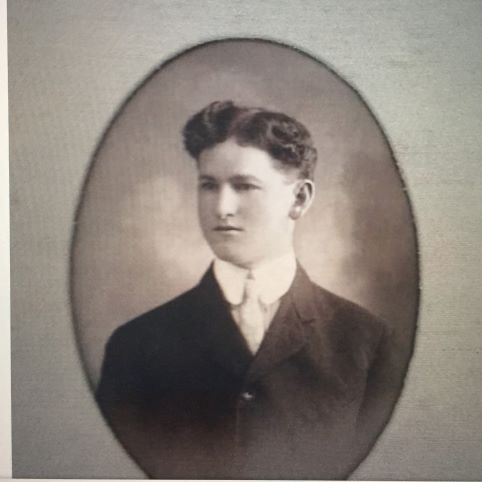
On the Birth of Bertha Margaret Rau

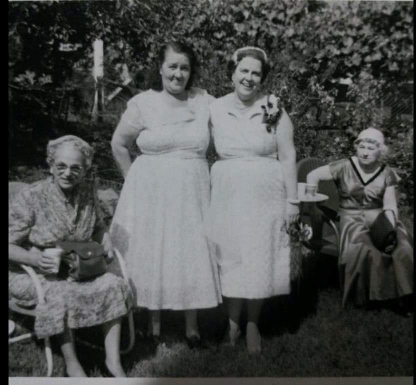
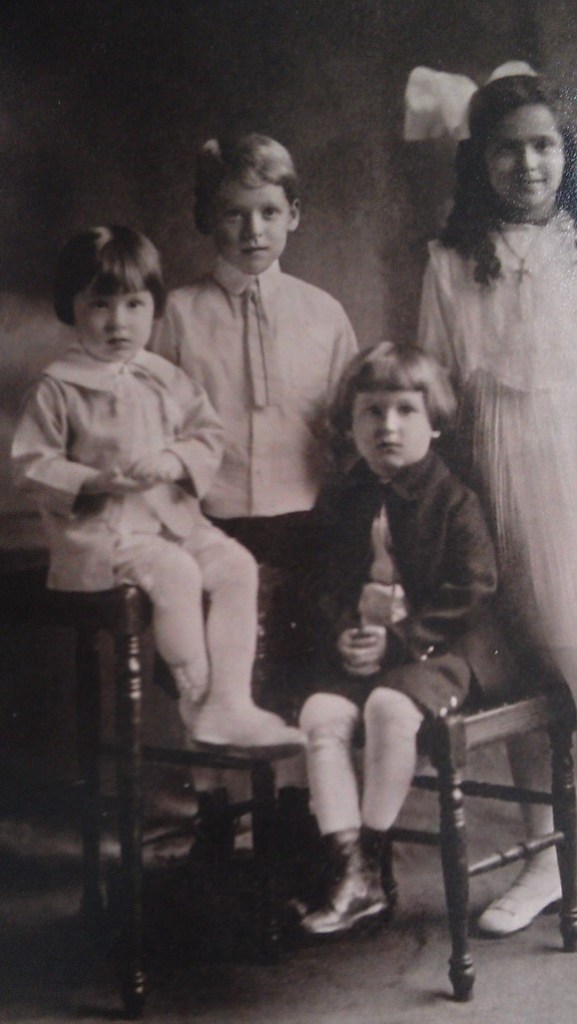
Bertha’s children: George, Francis (my grandfather), John, and Mary.
Not pictured: James (infant death), and Frederick (not yet born).

My paternal great-grandmother, Bertha Margaret Rau, was born on the Lower East Side of Manhattan on February 11, 1885. I do not have a photograph of Bertha herself, so I am sharing a photograph of her children.

When Bertha was born, East 2nd Street was part of a dense immigrant neighborhood known as Kleindeutschland—“Little Germany.” It was one of the largest German‑speaking communities in the world outside Europe, as I learned from this article from the Lower East Side Preservation Initiative.

Bertha’s parents, George and Fanny Rau, were married in 1876 in Karlsruhe, Germany. They had at least one child, Elise, before emigrating to the United States. I am still digging to learn more about my German ancestors, but chances are they moved from hardship in Germany into a different kind of hardship in New York.

“When they walked off their ships, hundreds of thousands of men, women and children stayed in New York and had to live in apartments that were cramped, dark, and impossibly small—in buildings that were decaying firetraps, with substandard or broken plumbing and conditions not fit for a human being. Much that they found on the Lower East Side and northward is documented in records, government agency reports and graphic photos in the City’s Municipal Archives and Library. These include Jacob Riis’ ground-breaking book, How the Other Half Lives.” ~ The Early Tenements of New York–Dark, Dank, and Dangerous

In 1885, most babies in German immigrant neighborhoods were delivered by midwives, or Hebammen in German. For German Catholic families, such as my ancestors, a priest might be called to perform an emergency baptism if a newborn seemed weak or unlikely to survive.

By the late 19th century, male physicians were beginning to provide obstetrical care. The neighboring German Dispensary offered free medical treatment to German immigrants. Philanthropists Oswald and Anna Ottendorfer—German immigrants themselves— financed the clinic and the German-English library located alongside.

Bertha Margaret Rau left New York with her father and some of her siblings after the death of her mother. She worked in a carpet maker in Boston, Massachusetts. There she met and married Michael Gilfeather. Bertha had six children in 12 years. In 1908, her baby James died of pneumonia when he was 6 months old.

Bertha died on August 9, 1956, at the age of 71, and is buried in Roslindale, Massachusetts.

To my father’s father’s mother–because you endured, I am here. I did not know your voice, your dreams, or your fears, yet I know that you lived.
Making Sense of My AncestryDNA Results

I received my AncestryDNA results last week and I am learning how to interpret what they actually mean. Ancestry.com identifies “Regions” where my DNA most closely matches their genetic reference panels. None of my Regions came as a surprise, but understanding how they arrive at those numbers has been instructive.

As Ancestry.com explains:

“A reference panel is a set of people whose DNA is typical of DNA from a certain place or group. When you take an AncestryDNA® test, we compare your DNA to the DNA in our reference panels to identify your ancestral origins. For example, to determine your ancestral regions, we find the reference panel DNA that’s most similar to each segment of your DNA. Then, we assign your segments to the regions they resemble.” — Ancestry.com

In other words, Ancestry.com assigns my DNA to regions even if my ancestors didn’t live in that exact location. My Quebec assignment, for example, appears because my genetic profile closely matches the modern descendants of the French founders who settled there in the 1600s. That lines up with what I know from my family history.

My report also shows small percentages from England and Norway, even though (as far as I know) none of my ancestors came from those countries. These small percentages simply mean I share slight genetic similarity with the people in those reference panels.

Another important point: we inherit a random mix of DNA from each of our parents. So the heritage I know from family records won’t necessarily line up with the DNA that I randomly received. And my parents inherited a random mix from their parents. I will never get 100% accuracy. There will be missing pieces.

With that in mind, I compared what I know about my family history with what my DNA report showed:

Irish: Four of my great-grandparents were Irish. That makes me 50% Irish. My mother’s grandparents were Irish immigrants, and on my father’s side both his maternal grandmother and paternal grandfather came from Irish families. My DNA shows 57% Irish, specifically from the Munster and Connacht provinces.

Québécois: Two of my maternal great-grandparents were descended from Quebec immigrants. I am 25% Québécois. My DNA shows 16%. From the results-by-parent chart, it appears that I inherited a larger share of my mother’s Irish DNA than her Québécois DNA.

Danish: My father’s maternal grandfather emigrated from Denmark. I am one-eighth, or 12.5% Danish. My DNA shows 11%, which is remarkably close.

German: My father’s paternal grandmother was born to German immigrants. Another one-eighth or 12.5%. My DNA shows 10%, a second close match.

In the end, my DNA results didn’t reveal any big surprises—but the report did add depth to what I already know. The results show which parts of my heritage were passed down to me, and in what proportions, while also pointing to historic communities that my ancestors belong to. It’s a starting point for more research, and a reminder that DNA is one more tool for understanding where we come from.

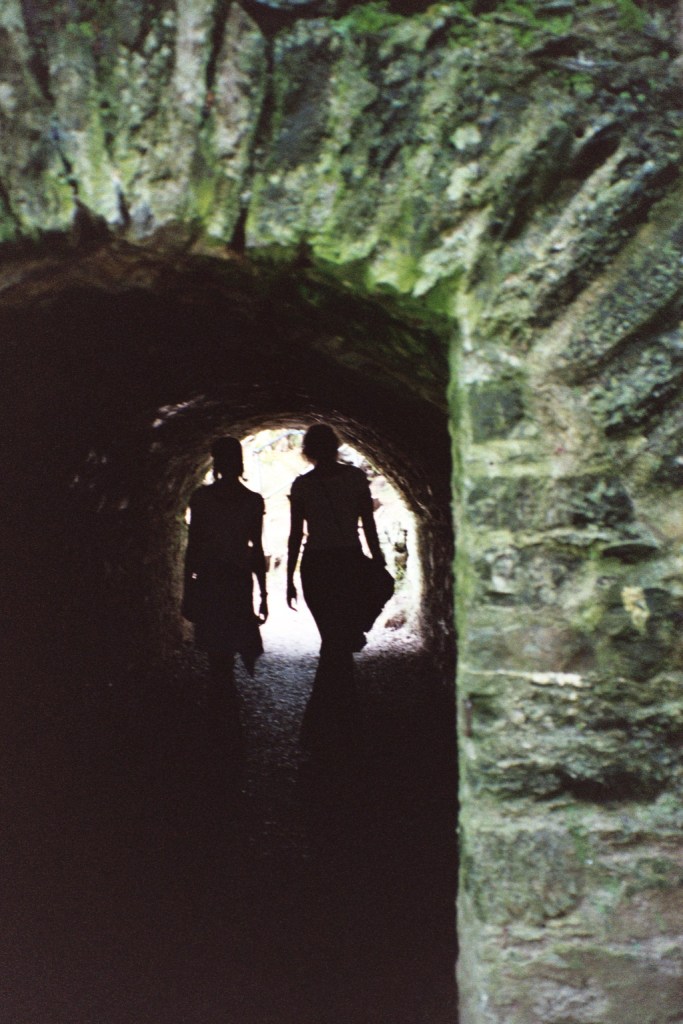
The photo above shows my teenaged daughters walking through a tunnel in Ireland in August, 2002.